Chapter 10 Class Problem
James R. Martin, Ph.D., CMA
Professor Emeritus, University of South Florida
Chapter 10 | MAAW's Textbook Table of Contents
Swim Company uses a complete standard cost system and produces a single product with standard costs as follows:
| Direct materials 5 lbs at $2.00 Direct labor 2 hours at 15.00 Factory overhead: Variable 2 hours at 20.00 Fixed 2 hours at 30.00 Total unit cost |
$10 30 40 60 $140 |
There were no beginning inventories. During the month 900 units were manufactured and 800 units were sold at a sales price of $200 each. Overhead rates are based on 1,000 units per month or 2,000 standard direct labor hours, i.e., this is the master budget denominator activity level. Overhead is applied on the basis of direct labor hours.
Actual results for the month were as follows:
Direct materials purchased 5,000 lbs at $1.94 per lb.
Direct materials used 4,550 lbs
Direct labor used 1,820 hours at $14.80 per hr.
Variable overhead costs incurred $36,250
Fixed overhead costs incurred $55,200
Required: Calculate the following and indicate if each variance is favorable (f) or unfavorable (u). The recommended approach is to make all the entries in T-account format to provide various checks on the accuracy of your answers.
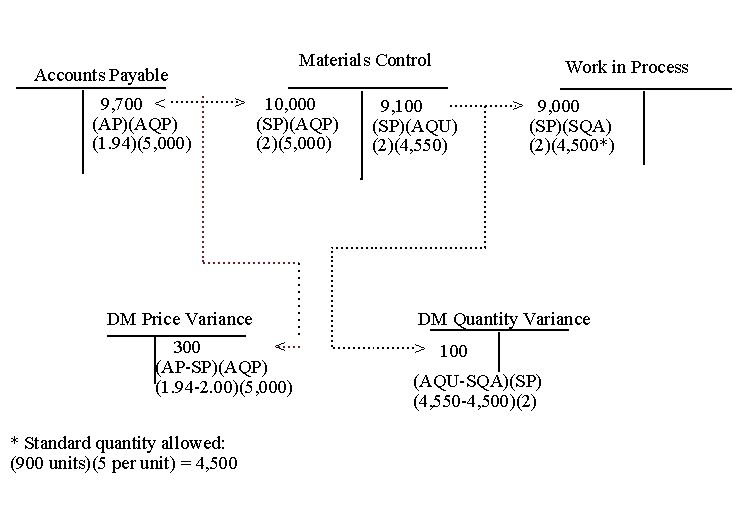
1. Direct material price variance based on quantity purchased.
2. Direct material price variance based on quantity used.
3. Direct material quantity variance.
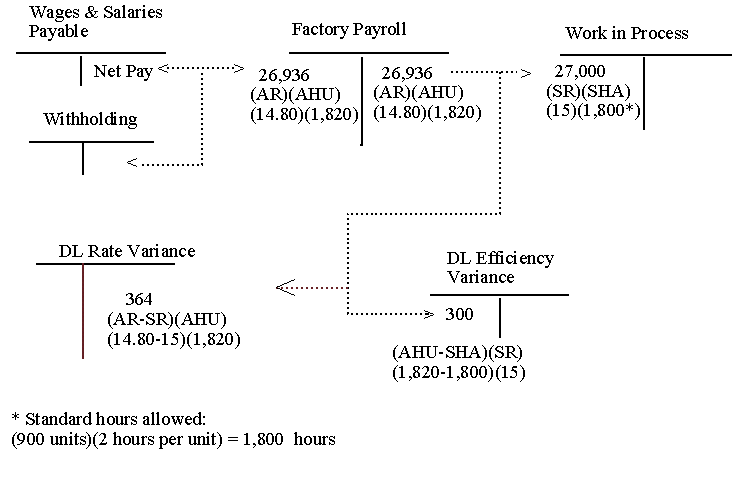
4. Direct labor rate variance.
5. Direct labor efficiency variance.
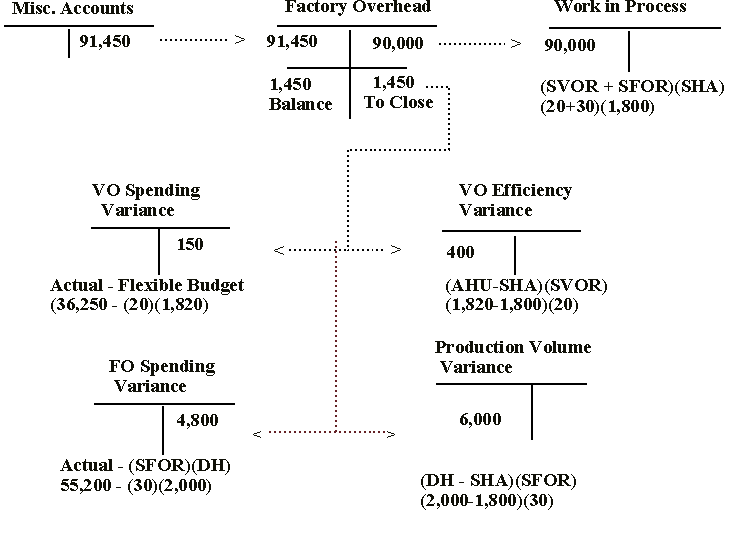
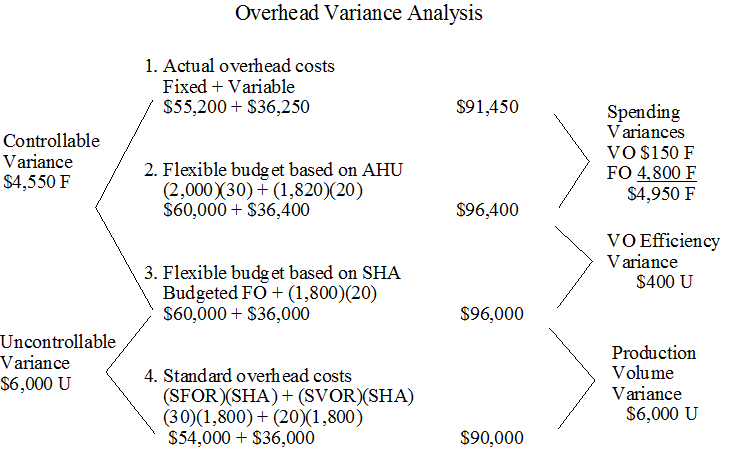
6. Total overhead variance.
7. The variable overhead spending variance.
8. The fixed overhead spending variance.
9. The variable overhead efficiency variance.
10. The production volume variance.
11. Assume the budgeted number of units to be produced for the month was
960. What is the planned production volume variance for the month?
12. What is the unplanned production volume variance for the month?
Chapter10 Class Problem - Swim Company Solution
Direct Materials Entries and Variances
1. Direct material price variance based on quantity purchased.
$300 favorable. See T-account entry below.
2. Direct material price variance based on quantity used.
($2-$1.94)(4,550) = $273 favorable.The debit to Materials Control would be $9,700, the credit to Materials Control would be $8,827 and the total
direct material variance would
be $173 favorable.
3. Direct material quantity variance.
$100 unfavorable. See T-account entry below.
4. Direct labor rate variance is $364 favorable.
5. Direct labor efficiency variance is $300 unfavorable.
See T-account entries below.
Direct Labor Entries and Variances
6. Total overhead variance.
7. The variable overhead spending variance.
8. The fixed overhead spending variance.
9. The variable overhead efficiency variance.
10. The production volume variance.
Factory Overhead Variance Analysis
11. Assume the budgeted number of units to be produced for the month was 960. What is the planned production volume variance for the month?
Budgeted (i.e., planned) hours would be:
(960)(2 hours) = 1,920. Denominator hours are
(1,000)(2) = 2,000.
The planned production volume variance is (80 hours below denominator capacity)($30per hour) = $2,400 unfavorable.
In terms of units the Planned PVV is (1,000 - 960)($60) = 2,400 unfav.
12. What is the unplanned production volume variance for the month?
Actual PVV $6,000 unfav - Planned PVV $2,400 unfav = Unplanned PVV $3,600 unfav.
In terms of units the Unplanned PVV is (960-900)($60) = $3,600 unfav.