Chapter 9 Exhibits
James R. Martin, Ph.D., CMA
Professor Emeritus, University of South Florida
Chapter 9 | MAAW's Textbook Table of Contents
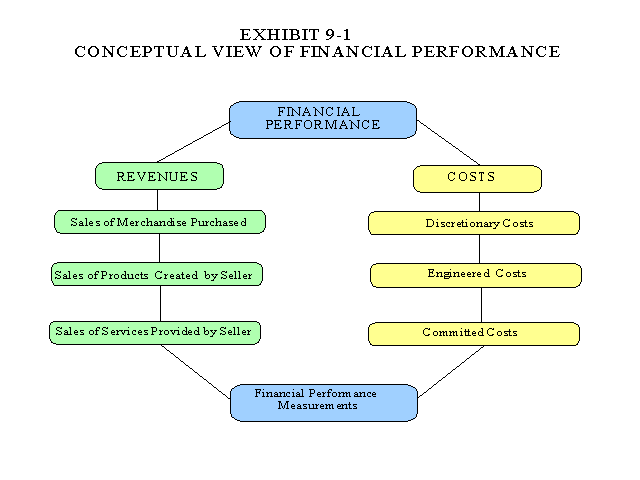
Exhibit 9-1: Conceptual View of Financial Performance
| Exhibit 9-2: Cost Defined in Terms of Cause and Effect | |||
| Type of cost | Cause and Effect or Cost Benefit Relationship |
Cost Behavior | Examples |
| Discretionary | Relationships are difficult or impossible
to define. |
Fixed, variable and mixed in the short run. | Cost of administrative and support services such as employee training, advertising, sales promotion, legal advice, preventive maintenance, and research and development. |
| Engineered | Relationships are relatively easy to define. | Variable in the short run. | Direct resources used in production activities such as direct materials and direct labor and many indirect resources such as electric power. |
| Committed | Relationships can be estimated, but not defined precisely. | Fixed in the short run. | Cost of establishing and maintaining the readiness to conduct business, such as the cost associated with plant and equipment. |
| Exhibit 9-3: Budget Types and Characteristics | |||
| Type of Budget |
Characteristics of the Technique |
Type of Cost Expenditure |
Examples |
| Appropriation | A maximum amount is established for certain expenditures based on management judgement. | Discretionary costs. | Employee training, advertising, sales promotion and research and development. |
| Flexible | A static amount (a) is established for
fixed costs and a variable rate (b) is determined per activity measure
for variable costs, i.e., Y = a + bX |
The static amount (a) includes both discretionary and committed costs while the flexible part (b) includes engineered costs per X value. | The static part: salaries, depreciation, property taxes and planned maintenance. The flexible part: direct material, direct labor and variable overhead. Also, some costs related to sales reps such as sales commissions and travel. |
| Capital | Decisions concerning potential investments are made using discounted cash flow techniques. | Committed costs. | New plant and equipment. |
| Master | A comprehensive plan is developed for all revenue and expenditures. | Discretionary, engineered and committed costs. | All revenue and expenditures for any company. |
| Supplementary Exhibit: Types of Appropriation Budgets | |
| Type | Basis of Budget Amount |
| Incremental | Last year’s budget plus an increment. |
| Priority Incremental | Last year’s budget plus an increment, but includes the manager’s priority of increases and possible decreases by activity. |
| Zero Based | Manager must supply detailed justification for the entire budget each budget period. In practice few budgets were ever zero based. Eighty percent based is more common. |
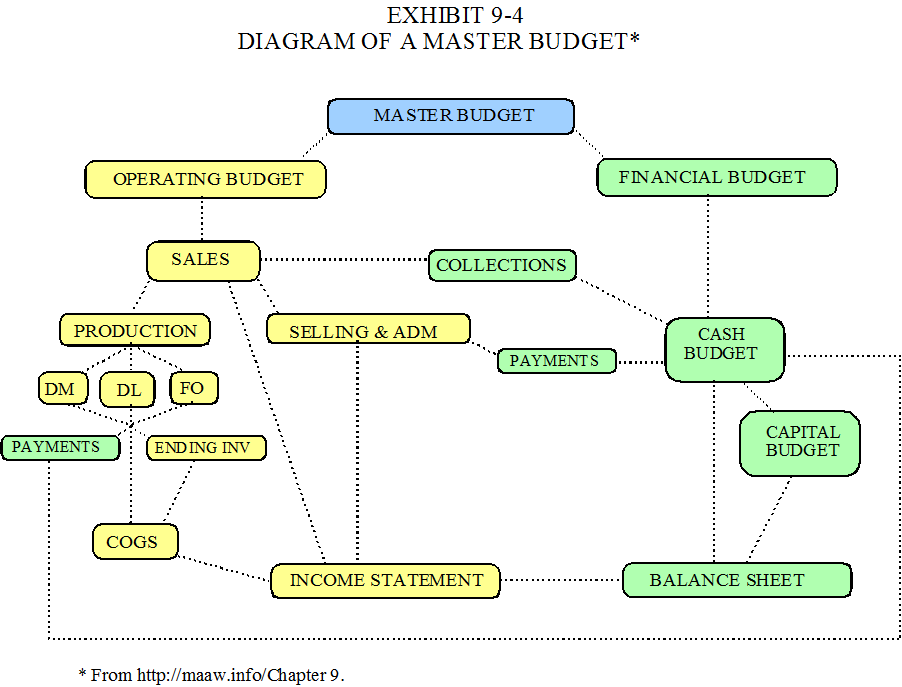
Exhibit 9-4: Diagram of a Master Budget
| Supplementary Exhibit: Responsibility Accounting | |
| Responsibility Centers | Evaluation Method |
| Revenue Centers | Sales |
| Cost Centers | Cost |
| Profit Centers | Profitability Measure |
| Investment Centers | Return on Investment |
Figure 9-1: Standard & Budgeted Fixed Overhead Compared
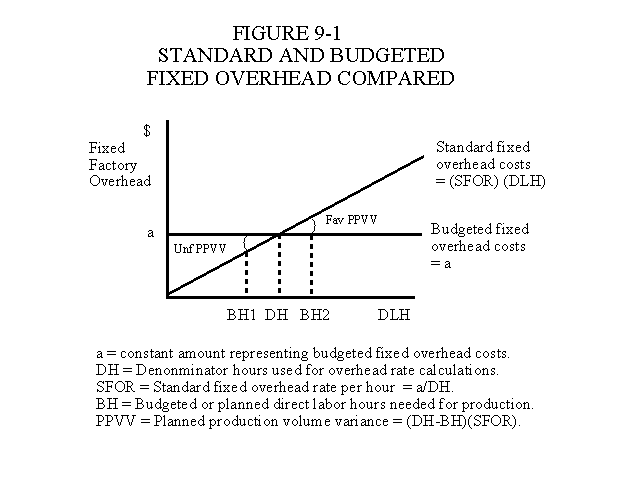
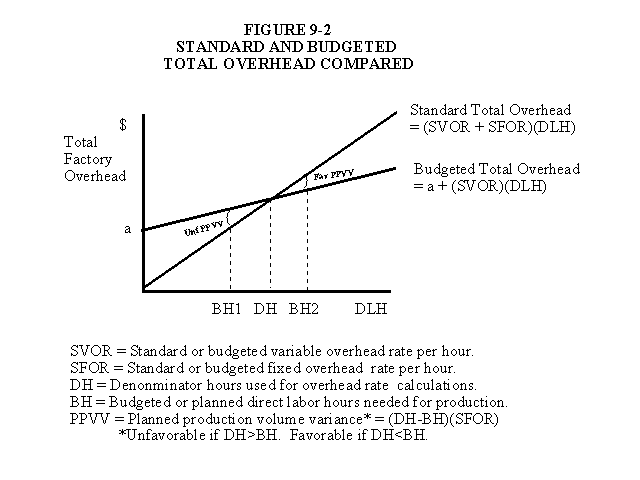
Figure 9-2: Standard and Budgeted Total Overhead Compared